How Activists and Political Movements Used Early Technology to Organize and Resist in the 1970s
Before the Internet emerged, Activists Created Their Own Networks
Thank you for subscribing
Thank you for subscribing
Thank you for subscribing
The Hewlett-Packard 9100A calculator represented more than a mere Computing Device. When it debuted in the late 1960s. It embodied power. This bulky, desktop machine with its distinctive display and rows of buttons signified something revolutionary: computational ability in a (somewhat) portable package. But what proved most significant wasn't just its technical capabilities; it was the possibilities it represented for social movements emerging across America.
"If we could calculate voter distributions this quickly," activists realized, "we could redraw canvassing maps in real-time." This insight transformed organizing efforts in underrepresented neighborhoods from Oakland to Chicago to the Bronx.
Popular understanding of the relationship between technology and activism in the 1970s often misses crucial dimensions. The dominant narrative focuses on hippie technologists in the Bay Area or MIT hackers creating the foundations of personal computing. But another story unfolded simultaneously—one where Black Panthers, feminist collectives, indigenous rights activists, and anti-war organizers adapted and repurposed available technologies to serve liberation movements. They weren't passive consumers of technology; they were active remixers and redeployers of technical tools for revolutionary ends.
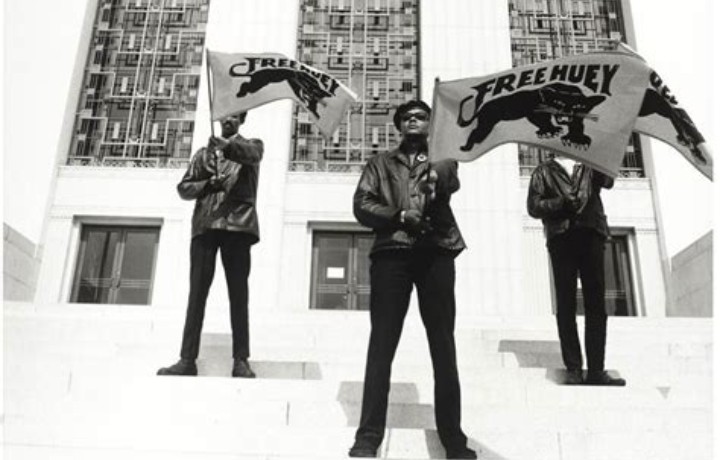
Bobby Seale and Elaine Brown understood this better than most. Their 1973 campaign guide for Oakland's local elections wasn't just a political document. It functioned as a technical manual that laid out how to use data and communication systems to mobilize communities that the political establishment had systematically disenfranchised. "The tools of the oppressor can be turned against the oppression," Seale said during strategy meetings. Campaign workers recall him standing over primitive computer printouts of voter registration data, pointing to blocks where Black residents lived but rarely voted.
"Look at these numbers," he'd say. "The system thinks it knows where the power is. But we can use their own data to build something they don't expect."
The Panthers were early adopters of database thinking, even before they had full access to databases as we understand them today. They created meticulously cross-referenced card files of supporters, resources, and community needs. Their famous free breakfast program—which fed thousands of children and which the FBI considered the Panthers' most dangerous initiative—relied on a sophisticated logistics operation that tracked food sources, volunteer schedules, and distribution points. This wasn't just charity; it was technology-enabled community resilience.
Gene Youngblood's vision of a "National Information Utility" particularly resonated with movement activists. In workshops held in community centers across the country, Youngblood outlined a system of decentralized information sharing that would circumvent corporate and government control. "Information wants to be free," he said. Years before the phrase became a hacker mantra, "but more importantly, people need to be free to access information."
Youngblood's ideas provided theoretical underpinning to what many activists were already doing intuitively—creating alternative information networks. Underground newspapers like the Berkeley Barb and radio stations like KPFA became an internet before the internet. They weren't just media outlets but nodes in a distributed communication system that could mobilize thousands of people for demonstrations within hours.
Activists recall frantically typing mimeograph stencils for emergency anti-war actions in 1972, after news of the Christmas bombings in North Vietnam reached them through alternative media channels—days before mainstream news would acknowledge the extent of the campaign. The smell of mimeograph fluid became forever linked in their memories with that feeling of urgent resistance.
Stewart Brand's Whole Earth Catalog functioned as the movement's version of a search engine. It wasn't just a collection of product listings; it was a curated database of tools, both physical and conceptual, for building alternative communities and communication systems. Brand's early reporting on computer culture helped many activists see computing not as the exclusive domain of the military-industrial complex but as something that could be hacked and repurposed for community needs.
"We're creating parallel systems," explained organizers in women's health collectives around 1974. "Information about our bodies, information about our rights...it doesn't need to flow through their channels anymore." The feminist health movement created some of the most effective information networks of the era, distributing knowledge that medical institutions had deliberately kept from women. Their photocopied guides and handbooks, passed from woman to woman, constituted a powerful peer-to-peer information system.
Indigenous activists pioneered similar approaches. At Wounded Knee in 1973, Lakota organizers used ham radios and a sophisticated relay system to maintain communication during the 71-days standoff with federal authorities. The government's attempted information blockade failed because activists had already established resilient alternative channels. Supply coordinators working from coastal cities witnessed how these communication technologies—primitive by today's standards—enabled a form of resistance that would have been impossible in earlier eras.
Among the most sophisticated technological resisters were the cryptographers—primarily Vietnam veterans who had turned their military-acquired skills toward protecting activist communications. Some veterans built modified cipher machines from salvaged parts to secure movement communications.
"The government is already listening to everything," one such cryptographer explained to fellow activists in 1976. "We need to speak in languages they can't understand." This was decades before encrypted messaging would become a mainstream concern but the fundamental issue remained the same: how to create spaces for free communication beyond the surveillance of hostile authorities.
These technological approaches weren't without controversy within movement circles. Bitter arguments erupted between those who saw any engagement with "the master's tools" as corruption and those who recognized that technology itself wasn't inherently oppressive—its control and deployment were the issue. "You can't dismantle the master's house with the master's tools," some quoted from Audre Lorde, whenever discussions turned to information systems. But others recognized that technology itself wasn't inherently oppressive—its control and deployment were the issue.
What's frequently misunderstood about 1970s activism is how much it involved information management challenges. The dominant images of the era—street protests, cultural rebellion, direct action—obscure the immense behind-the-scenes work of coordination and communication. When organizers created national actions, they solved complex logistical problems without the benefit of modern tools. Each successful demonstration represented thousands of phone calls, letters, mimeographed instructions, and in-person meetings—a tremendous expenditure of human energy that modern digital tools would render trivial.
A direct lineage connects these early experiments and today's digital activism landscape. The encrypted Signal messages used by contemporary protesters descend from those first crude ciphers. The distributed organization models of movements like Black Lives Matter reflect lessons learned from COINTELPRO's targeting of centralized leadership structures. And today's battles over AI ethics and algorithmic justice continue the fundamental question:
Will technology be deployed as a tool of liberation or control?
A particular moment crystallizes this connection. In 1977, Lee Felsenstein demonstrated the Community Memory terminal—one of the first public computerized bulletin board systems. Installed in a Berkeley record store, it allowed people to post and search for information without centralized control. As users interacted with this system—leaving messages about community resources, political actions, and personal connections—witnesses glimpsed our networked future.
"This is just the beginning," Felsenstein said. "Imagine when every community has access to tools like this."
One elderly activist, a veteran of labor movements dating back to the 1930s, approached the terminal cautiously. After Felsenstein explained how it worked, she typed a simple message announcing a tenant rights meeting. When it appeared on the screen, confirmed and accessible to anyone who might search for housing resources, she stepped back with tears in her eyes.
"All my life," she said, "we've fought to make our voices heard. To get information past those who would silence us." She gestured at the glowing screen. "This changes everything."
She was right, though not entirely in the ways activists hoped. The technology did change everything but the struggle over who would control these new channels—and to what ends they would be deployed—continues to this day.
What's often missing from histories of technology is how political these early visions were. Activists didn't see computers and networks as primarily commercial tools or entertainment platforms. They saw them as infrastructure for democracy—ways to distribute power by distributing information and connection. The Hewlett-Packard calculator that so impressed organizers wasn't valuable because it could quickly solve equations; it was valuable because it could help ensure that every neighborhood received campaign resources proportional to their potential impact.
As AI systems now centralize unprecedented power in the hands of a few corporations, echoes of those old concerns resonate. The question now asked is:
Will these tools enhance human autonomy or restrict it? Will they diversify access to knowledge or create new information monopolies? Will they strengthen communities or atomize them further?
Today's digital rights activists are sometimes surprised to learn about this longer history. "We act like we're facing entirely new questions," many observe, "but movements were grappling with the same fundamental issues fifty years ago."
They're right. The technical details have changed dramatically, but the central conflict remains: will technology serve as a force for liberation or a mechanism of control? The answer isn't determined by the technology itself but by who designs it, who has access to it, and whose values it embodies.
A document from 1974 with a simple statement of principles for an early computer resource center in Detroit captures this ethos: "Technology is never neutral. It always serves someone's interests. Our task is to ensure it serves the many, not the few."
That sentiment feels as urgent today as it did when it was first typed on that now-yellowed paper. The specific technologies have evolved beyond what activists could have imagined, but the essential struggle remains unchanged.
One might wonder what Bobby Seale would make of today's algorithms and platforms, or how Youngblood would view our corporate-dominated internet. They would likely see both tremendous promise and terrible danger—just as they did when confronting the technologies of their own time. They would recognize that each new technological development represents not just a technical achievement but a political battleground.
This understanding—that technology is fundamentally political—was perhaps the most important insight of 1970s tech activism. While Silicon Valley's emerging narrative positioned technology as a neutral tool for individual empowerment, movements for collective liberation recognized that all technical systems embed and reinforce particular power relationships. The question isn't whether technology has politics, but rather whose politics it serves.
As society now confronts the profound implications of artificial intelligence and ubiquitous surveillance, this perspective is more crucial than ever. The decisions being made today about how these systems are designed, deployed, and governed will shape power relations for generations to come.
When I observe young activists today using digital tools to organize mutual aid networks, circumvent censorship or protect vulnerable communities. What I can say is that this is the continuation of work begun decades ago. The technical capabilities have evolved tremendously. But the fundamental purpose remains: to use technology as a tool for collective liberation rather than control.
That old HP calculator is long gone, but the question it raised remains: In whose hands will technological power rest, and toward what ends will it be directed? The answer continues to be written not primarily by engineers but by movements willing to fight for a more just distribution of technological power. The true innovation isn't in the circuits and algorithms themselves but in how we govern them and who has a say in their deployment.
The technical tactics used by 1970s activists reveal their creativity and foresight. In Chicago, the Rainbow Coalition—an alliance between the Black Panthers, Young Lords, and Young Patriots—developed a communication system using CB radios to coordinate their "serve the people" programs across neighborhoods separated by racial boundaries and police surveillance. This technology, accessible and difficult to monitor comprehensively, allowed for real-time coordination that telephone networks (easily tapped by authorities) couldn't provide.
Within the anti-war movement, activists created elaborate telephone trees—proto-social networks that could rapidly disseminate information about actions or alerts about police movements. These weren't just ad hoc arrangements but carefully engineered systems with redundancy and security measures built in. If certain nodes in the network were compromised, the information could still flow through alternative pathways—a concept that internet designers would later formalize as packet switching.
Women's liberation groups developed some of the most innovative information distribution methods. The Jane Collective, which provided illegal but safe abortions in Chicago before Roe v. Wade, used a sophisticated system of rotating locations, code words, and anonymous telephone exchanges to connect women with vital healthcare while evading law enforcement. Their methods for information security and anonymous service delivery presaged many concepts now central to digital privacy.
The 1970s also saw experiments with video technology as a tool for movement building. The Portapak, Sony's first portable video camera system, was quickly adopted by activists who formed collectives like Top Value Television (TVTV) and the Videofreex. These groups documented protests, created alternative news coverage, and developed community television initiatives. Their work represented an early form of what we now call citizen journalism, recognizing that control of visual media was essential to controlling narratives about social movements.
Environmental activists were particularly adept at using scientific and technical tools to challenge corporate claims. The Silicon Valley Toxics Coalition, formed in the late 1970s, used emerging computer databases to track corporate pollution patterns and expose the environmental costs of the technology industry itself. Their work demonstrated how the very tools produced by the tech industry could be turned to hold that industry accountable—a recursive application of technology against its makers.
Perhaps the most profound technological innovation of 1970s activism wasn't any particular device or system, but a way of thinking about technology itself. Activists began to articulate what would later be called "appropriate technology"—the idea that technological solutions should be designed for the specific contexts in which they would be used with consideration for social, environmental, and political impacts.
This approach was exemplified by movement-oriented publications like the Radical Software journal, which explored how media technologies could be redesigned to serve communal rather than commercial purposes. Contributors envisioned networks where individuals and communities could be both producers and consumers of media—a vision that has partially materialized in the social internet, though not always with the liberatory outcomes they hoped for.
The activism of the 1970s wasn't just about using technology; it was about reimagining it. While Stewart Brand and other technologists from the counterculture were laying the groundwork for personal computing, movement activists were thinking even further ahead—to networked computing as a tool for collective action and distributed decision-making.
When today's movements deploy digital tools for consensus building, horizontal organizing, and rapid response, they're drawing on traditions that began with these 1970s experiments. The Occupy movement's use of digital tools for distributed decision-making, Black Lives Matter's sophisticated use of social media for both organizing and narrative intervention can create powerful collective evidence all have roots in these earlier approaches.
The lessons from this era remain vitally relevant. In a time when calls for "ethical technology" often focus narrowly on adding guardrails to existing systems, the 1970s movements remind us that the more fundamental questions are about who controls technology and for what purposes. Their approaches suggest that genuine technological ethics requires not just better design but different power relations around technology itself.
As movements continue to contest the terms of our digital future, they would do well to remember this hidden history—not just as an interesting footnote but as a source of practical wisdom about how technology can be harnessed for liberation rather than control. The challenges have evolved but the core insight remains: technological systems are never neutral, and their politics are determined not just by their design but by who has the power to shape and deploy them.
This isn't just merely historical curiosity; it's a vital perspective for confronting the technological challenges of our time. As AI, biometric surveillance, and algorithmic governance reshape power relations across society, the approaches pioneered by 1970s activists offer both inspiration and practical guidance for those seeking to ensure that technology serves human liberation rather than control.